
Reading Opponents in Blackjack Tournaments
Blackjack is usually described as a game played against the dealer, and on any individual hand that's true. But in a tournament, the players sitting around you matter just as much as the cards you're dealt - because a tournament isn't decided by beating the dealer, it's decided by finishing ahead of them.
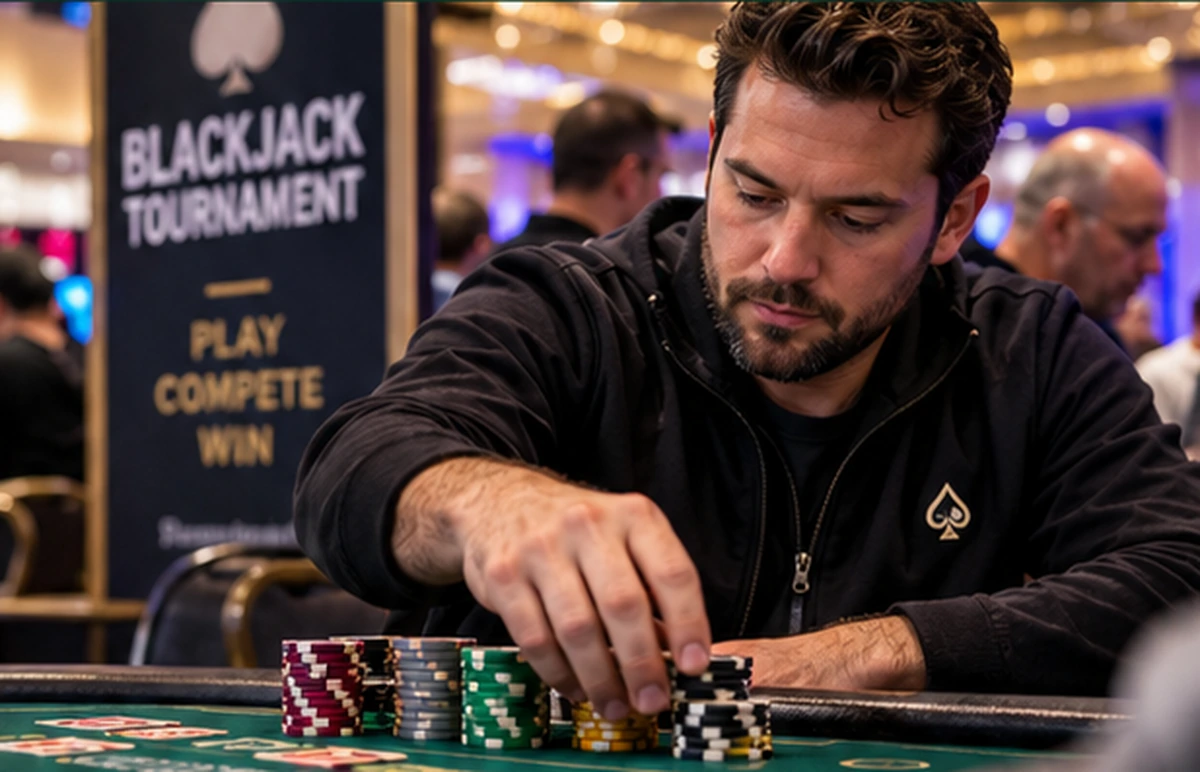
Why Opponents Matter More Than the Dealer Late in a Round
Early in a round, the dealer's up-card still drives most of your hand-by-hand decisions, the same as any cash game. But as a round nears its end, the calculation shifts: your bet size and even your hit/stand decisions start depending on what the players near you in the standings are likely to do, not just on basic strategy.
What to Track During a Round
- Stack sizes relative to yours. Keep a running sense of who's ahead of you, who's behind you, and by how much - not just your own total.
- Betting patterns. Some players bet the same amount every hand regardless of position; others adjust aggressively as the round nears its end. Knowing which type of player is near you in the standings helps you anticipate their next bet.
- Tendencies under pressure. Watch how players react when they fall behind - do they take bigger risks immediately, or wait for a clear opportunity? This becomes useful information on the final hands of a round.
Betting Around Your Rivals
A core tournament skill is sizing your bet not just to beat the dealer, but to beat a specific opponent's likely result. If you're a few chips behind the player just ahead of you with one hand left, your bet needs to be large enough that a win puts you back in front of them - factoring in what they're likely to bet themselves, based on how they've played the rest of the round.
This sometimes means betting an unusual amount on purpose. If two rivals are both close to your stack, an oddly-sized bet can make it harder for either of them to cover your total exactly, forcing them into an uncomfortable decision of their own.
Reading the Table, Not Just the Leaderboard
Displayed chip counts only tell part of the story. Watching how confidently (or nervously) a player commits chips, how quickly they act, and whether they deviate from basic strategy under pressure can tell you more about what they'll do on the next hand than their stack size alone.
Reading opponents is a skill that improves with repetition - the more tournaments you play, the faster you'll recognize the handful of player types that show up again and again at almost every table.